
India’s journey towards becoming a developed nation by 2047 is anchored in structural reforms that strengthen economic efficiency, transparency and inclusive growth. Among these, the Next-Generation Goods and Services Tax (GST) reforms, widely referred to as GST 2.0, represent a significant step in simplifying India’s indirect tax architecture.
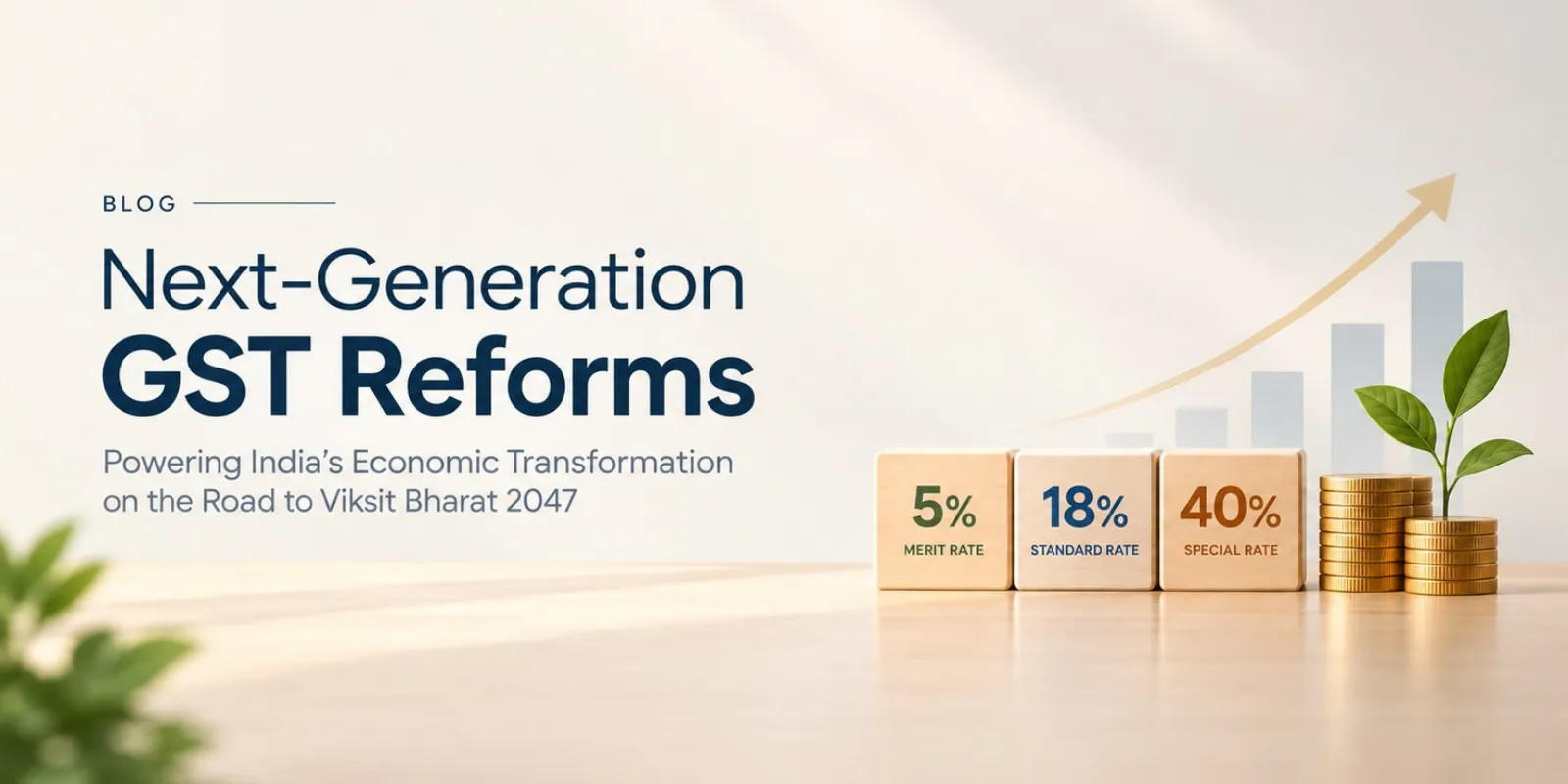
Introduced in September 2025, the principal GST 2.0 rate rationalisation moved India towards a simplified two-rate structure, with 5% as the merit rate and 18% as the standard rate, alongside a special 40% rate for specified luxury and demerit goods. The revised rates and exemptions for most goods and services took effect on 22 September 2025, following the recommendations of the 56th GST Council meeting. Specified tobacco products were subject to a separate implementation arrangement. The reforms were designed to provide relief to consumers, simplify compliance, support businesses and strengthen domestic economic activity.
The next phase of reform was addressed at the 57th GST Council meeting held on 8 October 2026. While the 56th meeting had focused on rate rationalisation, the 57th meeting recommended a range of process and compliance reforms relating to registration, return filing, refunds, input tax credit, dispute resolution and trade facilitation. These recommendations mark a further stage in the evolution of GST; their implementation remains subject to the applicable legislative amendments, rules, notifications and other formal measures.
The evolution of GST is also reflected in the expansion of its taxpayer base and revenue collections. According to the Government of India, the number of GST taxpayers increased from approximately 66.5 lakh in 2017 to 1.65 crore as of May 2026. Gross GST collections reached approximately ₹22.27 lakh crore in FY 2025–26, compared with ₹13.76 lakh crore in FY 2021–22. These developments demonstrate the expansion of the GST system, although changes in revenue also reflect economic growth, prices, trade activity and compliance improvements. The Economic Survey 2025–26 provides further context on GST revenue and the expansion of the formal tax base.
GST 2.0 builds on the foundation established in July 2017, when GST replaced multiple Central and State indirect taxes with a common tax framework. The objective was to reduce the cascading effect of taxes, facilitate interstate trade and create a more integrated national market, supported by the legislative framework governing India’s Goods and Services Tax.
The next phase of reform focuses on making this framework simpler, more predictable and more responsive to the needs of consumers, entrepreneurs and industries. Its contribution to the vision of Viksit Bharat 2047 will depend not only on rate rationalisation but also on effective implementation, accessible dispute resolution, efficient refunds and a transparent tax administration.
Understanding Next-Generation GST
Next-Generation GST is a significant restructuring of the existing tax framework rather than merely a minor adjustment to tax rates. The reforms initiated through rate rationalisation in 2025 are now complemented by the process reforms recommended in October 2026.
One of the most prominent features of GST 2.0 is the rationalisation of tax rates into two principal slabs:
● 5% merit rate: Applicable to specified goods and services, including categories receiving tax relief under the reforms.
● 18% standard rate: Applicable to the majority of taxable goods and services covered by the standard rate.
● 40% special rate: Applicable to specified luxury and demerit goods.
Specified goods and services continue to benefit from exemptions or other applicable treatments. The rate applicable to an individual product or service depends on its classification and the relevant notifications. The official GST Council FAQs on the 56th meeting provide further information on the 2025 rate changes.
This restructuring replaced the earlier four principal slabs of 5%, 12%, 18% and 28% with a simpler framework. It is intended to reduce classification-related disputes, improve predictability and make compliance easier for businesses. The actual impact, however, depends on the applicable rate, the nature of the transaction and the implementation of the relevant provisions.
The 57th GST Council meeting did not replace this rate structure with a new general framework. Instead, it recommended clarifications and changes relating to particular goods and services, alongside broader administrative reforms.
Technology-Driven Tax Administration
Digital infrastructure remains central to GST administration. E-invoicing, electronic return filing, invoice data reporting, e-way bills and system-based verification support more standardised compliance and help tax authorities identify inconsistencies.
E-invoicing has been implemented progressively, with the applicability threshold reduced over time. From 1 August 2023, the general e-invoicing requirement was extended to businesses with an aggregate annual turnover exceeding ₹5 crore, subject to the applicable rules and exemptions. Separately, from 1 April 2025, taxpayers with an annual aggregate turnover of ₹10 crore or more became subject to a 30-day reporting restriction for covered e-invoices, credit notes and debit notes. Businesses should refer to the applicable official e-invoice reporting guidance for the relevant requirements.
The 57th GST Council meeting also recommended further changes to digital compliance and reporting. These proposals should not be treated as operative extensions unless brought into effect through the applicable legal measures.
These measures and proposals strengthen the focus on timely invoice reporting and the availability of transaction data. Further use of analytics and automated verification can support risk-based compliance, provided that system accuracy, data protection and effective grievance redressal remain priorities.
Strengthening Input Tax Credit
Input tax credit (ITC) is an essential feature of GST because it allows eligible businesses to offset qualifying tax paid on inputs against their output tax liability, subject to statutory conditions. The applicable rules are governed by the legislative provisions governing input tax credit under GST.
More predictable credit availability and efficient refund processing can improve working capital management, particularly for manufacturers, exporters and small businesses. Conversely, mismatches, blocked credits, delayed refunds and disputes can impose financial costs.
The 57th GST Council meeting recommended measures to improve the flow of input tax credit and address specified restrictions. The scope and effective dates of these proposals must be determined from the relevant legal instruments. The official 57th meeting FAQsshould be consulted alongside the applicable provisions of the CGST Act, rules and notifications.
The continued reform of GST procedures therefore needs to focus on reducing avoidable compliance friction while preserving safeguards against fraudulent claims and ensuring that credit is available only where the law permits it.
Why GST Reform Matters for Viksit Bharat 2047
India’s ambition to become a developed nation by 2047 requires sustained economic growth, productive investment, competitive enterprises and efficient public institutions. A transparent and predictable tax system can support these objectives by reducing unnecessary transaction costs and improving the functioning of domestic markets.
The significance of Next-Generation GST can be understood through the following dimensions.
1. Strengthening the Formal Economy
A well-designed tax framework can encourage businesses to participate in formal supply chains. GST registration, electronic invoicing and digital returns improve transaction visibility and can support access to formal credit and larger commercial markets.
The increase in GST taxpayers from approximately 66.5 lakh in 2017 to 1.65 crore as of May 2026 reflects the substantial expansion of the registered taxpayer base. However, registration growth should not be attributed exclusively to GST reforms, as economic expansion, enforcement and changes in business participation also influence these numbers.
The 57th GST Council meeting recommended further measures to simplify registration and facilitate participation by eligible small suppliers. These proposals are intended to reduce administrative barriers and support participation in formal supply chains. Their effect will depend on the final legal measures and implementation.
2. Supporting Consumption and Household Affordability
Tax rationalisation can improve affordability when the applicable GST rate on a product or service is reduced and the benefit is passed on to consumers.
The 2025 reforms were intended to provide relief on specified household goods, food products, healthcare-related items and other categories. Lower indirect taxes can increase consumers’ purchasing power and support demand, particularly when savings are directed towards essential expenditure. The official GST Council FAQs on the 2025 rate changesprovide details of the categories covered.
The impact on household budgets is not uniform, however. It depends on the products purchased, the previous and revised tax rates, price movements and the extent to which businesses pass on tax reductions. The 57th meeting also recommended changes and clarifications for specified goods and services, but these should be assessed individually against the relevant legal measures.
3. Enabling Investment and Entrepreneurship
A simpler and more predictable tax framework can reduce the administrative burden on enterprises and help businesses plan production, procurement and expansion.
For domestic entrepreneurs and international investors, clarity regarding tax treatment, input tax credit and compliance obligations can improve the predictability of business operations. The benefits are particularly relevant for businesses operating across multiple States, where differences in procedures and tax interpretations can otherwise create additional costs.
The 57th GST Council meeting recommended further process reforms, including faster refund processing, improvements to registration and return filing, and common standards for GST notices and proceedings. Effective implementation and consistent interpretation of the law remain important to translating these advantages into sustained investment.
To understand the policy rationale behind Next-Generation GST, watch the discussion below:
Explore how GST reforms are shaping India’s economic landscape and supporting the vision of Viksit Bharat 2047 in this :
The Seven Pillars of Next-Generation GST
Next-Generation GST builds on the existing tax framework through rate rationalisation, digital administration, trade facilitation and institutional improvements. The 57th GST Council meeting added a further focus on process reform, taxpayer facilitation and dispute prevention. These measures are intended to make compliance more efficient while maintaining revenue integrity.
1. Simplicity in Tax Structure
The move towards two principal GST rates is intended to reduce the complexity associated with multiple tax slabs. A simpler structure can make tax treatment easier to understand and reduce disputes arising from the classification of similar products.
Nevertheless, exemptions, special rates and product-specific classifications continue to require careful interpretation. The 57th GST Council meeting recommended clarifications on the treatment of certain goods and services, demonstrating the continuing importance of precise classification and consistent interpretation. Simplification should therefore be accompanied by clear notifications, accessible guidance and consistent implementation.
2. Transparency and Accountability
GST’s digital architecture creates an electronic record of reported transactions and supports system-based verification. Invoice data, returns and related records can help identify discrepancies and strengthen compliance monitoring.
These mechanisms can improve accountability and revenue assurance. Their effectiveness depends on reliable data, proportionate enforcement and safeguards against erroneous assessments.
The 57th GST Council meeting recommended common standards for GST notices and proceedings, including guidance on the quality and timely issuance of notices and adjudication or appeal orders. The recommendations also emphasised adherence to the principles of natural justice, including personal hearings where applicable. The official 57th meeting press release sets out the recommendations.
E-invoicing, electronic returns and e-way bills have made digital processes integral to GST compliance. Automated data flows can reduce repetitive manual work and facilitate reconciliation between reported transactions.
The reporting timeline reflects the evolving digital compliance framework, with official guidance on the e-invoice reporting time limit for businesses with an annual aggregate turnover of ₹10 crore or more setting out the applicable requirements effective from 1 April 2025.
The 57th GST Council meeting recommended additional changes to return filing and reconciliation. For businesses, timely reporting, accurate records and suitable accounting systems are increasingly important to avoid disruptions and maintain compliance. The proposed changes should be monitored through subsequent notifications and official advisories before businesses alter their compliance processes.
Micro, small and medium enterprises (MSMEs) play a significant role in employment, manufacturing, entrepreneurship and exports.
A more predictable GST framework can help eligible businesses participate in formal supply chains, serve customers across State boundaries and maintain better transaction records. Digitisation may also support access to institutional finance and larger business opportunities.
The 57th GST Council meeting recommended several measures relevant to smaller enterprises, including simplified registration for eligible e-commerce sellers and proposed relief for certain small taxpayers. The conditions and scope of these proposals should be checked against the official GST Council FAQs and the applicable legal instruments.
At the same time, compliance costs can be disproportionately burdensome for smaller enterprises. Simplified procedures, accessible professional guidance, efficient refunds and proportionate enforcement are important to ensuring that GST reforms benefit MSMEs in practice.
5. Strengthening Interstate Trade
GST was designed to facilitate interstate commerce by replacing multiple indirect tax arrangements with a common framework and destination-based taxation.
An integrated tax system can help businesses organise procurement, warehousing and distribution according to commercial requirements rather than tax-driven considerations. E-way bills and electronic documentation further support the movement of goods.
The 57th GST Council meeting recommended changes intended to facilitate the movement of goods and reduce avoidable disruption during transit. The effect of these proposals will depend on the final legal provisions and their implementation. The broader benefits also depend on complementary improvements in transport infrastructure, logistics services and State-level administration.
6. Enhancing Export Competitiveness
India’s export performance is an important indicator of its integration into global markets. According to the Ministry of Commerce and Industry, India’s total merchandise and services exports reached an estimated USD 863.1 billion in FY 2025–26, reflecting growth over the previous financial year, as reported in the Ministry’s official export release.
GST can support export competitiveness through zero-rated supplies, eligible input tax credit refunds and digital compliance processes. Efficient refund mechanisms are particularly important because delays can increase exporters’ working capital requirements.
The 57th GST Council meeting recommended changes intended to facilitate exports of services and improve the refund framework. These recommendations could help clarify the tax treatment of particular cross-border service arrangements and improve access to export-related benefits, subject to the applicable statutory amendments and notifications. A simplified domestic tax system can complement other measures aimed at improving manufacturing capacity, logistics, trade facilitation and integration into global value chains. GST alone, however, does not determine export performance, which also depends on international demand, exchange rates, production costs and trade policy.
The structure of indirect taxation affects households differently depending on their consumption patterns and incomes.
Lower rates and exemptions for specified essential goods can help protect affordability, while higher rates on selected luxury and demerit goods can reflect broader policy objectives. The effect on equity depends on the overall distribution of consumption and the design of the tax structure.
The 57th GST Council meeting also recommended targeted measures affecting particular goods and services. The scope of any benefit depends on the relevant recommendation being implemented through the applicable legal instrument.
A fair and effective GST system must balance revenue requirements, administrative simplicity and consumer welfare while ensuring that the applicable tax treatment remains clear and predictable.
For citizens, the value of GST reform lies in its practical impact on the cost of living, purchasing power and access to goods and services.
Where GST rates are reduced, consumers may benefit from lower prices, provided the tax reduction is passed through the supply chain. The 2025 reforms were designed to provide relief across specified product and service categories, including selected household goods and healthcare-related items.
Savings from lower taxes can leave households with more disposable income for education, healthcare, housing and other priorities. However, the extent of the benefit varies according to household spending patterns and the prices charged by businesses.
The 57th GST Council meeting recommended further changes affecting selected goods and services. These are category-specific proposals and should not be interpreted as a general reduction in GST rates for all consumers.
Consumers should therefore distinguish between the general policy objective of reducing the tax burden and the actual tax rate applicable to a particular product or service.
Impact on Industries and Businesses
GST 2.0 is intended to improve the business environment by simplifying rates and refining administrative processes. Its potential benefits extend across compliance, supply chain management and investment planning.
A simpler rate structure can make tax classification and transaction planning easier. Digital invoicing and electronic returns can also reduce repetitive data entry and support reconciliation.
The 57th GST Council meeting recommended measures to simplify registration, reduce return mismatches, improve refund processing and standardise GST notices and proceedings. It also recommended changes to penalty and prosecution provisions. These are recommendations for legal changes, not statements that the existing statutory provisions have already been amended. Businesses should continue to comply with the law currently in force and monitor the official GST Council updates for implementation details.
Businesses must also continue to comply with registration, invoicing, return filing, record-keeping and input tax credit requirements. The overall reduction in compliance costs will depend on how effectively the reforms reduce complexity in practice.
A common indirect tax framework can help businesses organise distribution networks on the basis of commercial efficiency.
Companies may be able to consolidate warehouses, improve inventory management and serve customers across State boundaries more efficiently. Digital documentation can also improve visibility into the movement of goods.
The 57th GST Council meeting recommended changes intended to facilitate the movement of goods and reduce unnecessary interception during transit. These proposals could support more efficient interstate operations if implemented as intended. The relevant recommendations are available through the GST Council’s official press-release archive.
Such gains are influenced by several factors, including transport infrastructure, warehousing capacity, freight costs and operational planning. They should not be attributed to GST alone.
A predictable tax environment is an important consideration in long-term investment decisions. Clear rules, consistent administration and efficient dispute resolution can reduce uncertainty for domestic and international businesses.
The 57th GST Council meeting recommended improvements to the process for issuing demand notices and adjudication or appeal orders, including greater consistency and adherence to procedural safeguards. These measures are intended to strengthen legal certainty and taxpayer access to remedies. Their effectiveness will depend on the final legal changes, institutional capacity and timely resolution of disputes.
Impact on Exporters and Importers
International trade is an important contributor to India’s economic development. GST affects cross-border trade through its treatment of exports, imports and the tax credit associated with business transactions.
Exports are generally treated as zero-rated supplies under GST, subject to the applicable statutory provisions. This framework is intended to prevent domestic GST from becoming an embedded cost in exported goods and services.
Key features include:
● Zero-rating of eligible exports.
● Input tax credit and refund mechanisms, subject to statutory conditions.
● Digital documentation and compliance processes.
The 57th GST Council meeting recommended changes intended to facilitate exports of services and improve the refund framework. The proposed amendments contain conditions and prospective dates for particular categories of credit, so businesses should consult the final legal instruments before relying on these changes.
Efficient processing of eligible refunds can reduce working capital pressures and improve exporters’ cash flow. This is particularly important for businesses operating with narrow margins or long production and shipping cycles.
Imported goods are generally subject to applicable customs duties and integrated GST, while the tax treatment of imported services is governed by the relevant provisions.
For eligible registered businesses, input tax credit may be available on qualifying import-related GST, subject to the applicable conditions and restrictions.
The 57th GST Council meeting recommended extending e-invoicing to specified imports of services for taxpayers meeting the proposed turnover threshold. These proposals should be distinguished from the existing rules applicable to imports and should be treated as operative only when the relevant legal measures take effect.
Digital customs and GST processes can support more efficient documentation and reconciliation. However, GST rate rationalisation does not eliminate customs duties or all procedural requirements associated with international trade.
India’s estimated exports of USD 863.1 billion in FY 2025–26 underline the scale of its trade activity. Continued progress towards higher export targets will require coordinated improvements in production, logistics, trade facilitation, market access and regulatory efficiency. The export figure is available in the Ministry of Commerce and Industry’s official release.
Fiscal Strength and Economic Growth
GST has become a major source of indirect tax revenue for the Centre and the States. Gross GST collections increased to approximately ₹22.27 lakh crore in FY 2025–26, reflecting the expansion of the tax base and the scale of economic activity recorded under the system. TheEconomic Survey 2025–26 provides context on GST revenue and formalisation; the exact annual collection figure should be cross-checked against the official government release reporting that total.
The revenue implications of rate rationalisation must be assessed carefully. Lower rates may reduce tax liabilities in particular categories, while changes in consumption, compliance, production and the volume of taxable transactions can influence overall collections.
The 57th GST Council meeting focused primarily on process reforms rather than a fresh general restructuring of the principal GST rate framework. Its recommendations on registration, return filing, refunds, input tax credit and dispute resolution are intended to improve administration and reduce compliance friction. Their fiscal implications will depend on the final design and implementation of the measures.
The net fiscal effect depends on the interaction of these factors rather than on any single measure. It is therefore more appropriate to evaluate the reforms through actual revenue performance, compliance trends and their impact on consumers and businesses than to assume that increased consumption will automatically offset every rate reduction.
Over the longer term, an efficient GST framework can support:
● Improved tax compliance and revenue administration.
● Lower avoidable transaction costs.
● More predictable business operations.
● A stronger institutional framework for dispute resolution.
● Greater transparency in indirect taxation.
These outcomes can contribute to fiscal stability and economic efficiency when supported by sound implementation.
GST as a Catalyst for Inclusive Development
The benefits of GST reform must extend beyond large corporations and major urban centres.
Small enterprises can gain from access to national markets and formal supply chains. Eligible exporters can benefit from effective credit and refund mechanisms. Consumers may benefit from lower rates on specified products, while businesses can gain from more predictable compliance requirements.
The 57th GST Council meeting recommended measures that could support smaller enterprises, including simplified registration for eligible e-commerce sellers and proposed relief for certain small taxpayers. The Council also recommended changes intended to improve refund processing and reduce mismatches in input tax credit reporting.
Farmers and agricultural enterprises may also benefit from changes affecting particular agricultural inputs, equipment and related services. The scope of any benefit depends on the applicable legal measures.
Inclusive development therefore requires more than rate rationalisation. It also depends on accessible compliance systems, timely refunds, clear rules and practical support for enterprises with limited administrative capacity.
The Road Ahead: Towards a More Unified Tax System
The evolution of GST reflects India’s continuing effort to create a simpler and more integrated indirect tax framework.
The 2025 rate rationalisation marked an important transition from four principal slabs to two main rates, supplemented by a special 40% rate for specified luxury and demerit goods. The reforms were intended to reduce complexity while providing targeted relief and supporting economic activity.
The 57th GST Council meeting, held on 8 October 2026, marked a further phase of reform by focusing on process simplification, refunds, input tax credit, registration, penalties, dispute resolution and trade facilitation. Its recommendations include proposed changes to GST enforcement provisions, measures to reduce procedural friction for eligible small businesses, and improvements to the treatment and reporting of input tax credit. Further details are available in the Council’s official meeting release.
A single GST rate is sometimes discussed as a possible future model for further simplification. However, it should not be presented as an announced government commitment or an inevitable next stage of reform. Any such change would require detailed consideration of revenue requirements, the distribution of the tax burden, essential goods, State finances and the treatment of different sectors.
The more immediate priorities are effective implementation, consistent interpretation, efficient refund processing, digital reliability and accessible dispute resolution. The 57th meeting’s recommendations on standardised notices and proceedings, automated refund processing and improved return reconciliation reflect these priorities.
The effective functioning of the Goods and Services Tax Appellate Tribunal (GSTAT) is particularly relevant in this context. The effectiveness of the appellate mechanism will depend on operational capacity, procedural clarity and timely decisions.
Further improvements in logistics, digital infrastructure and interstate commerce can complement these reforms. Together, they can strengthen the functioning of the domestic market and support a more predictable environment for businesses and consumers. The actual effect of the 57th meeting’s recommendations will depend on the relevant amendments, rules, notifications and implementation measures.
The vision of GST reforms aligns with India’s broader development goals under Viksit Bharat 2047, with a focus on economic growth, institutional efficiency and inclusive development.
Conclusion: A Transformative Reform for India’s Future
The evolution of GST reflects India’s broader development journey: ambitious, complex and continuously adapting to the needs of a growing economy.
Since its introduction in 2017, GST has established a common framework for much of India’s indirect taxation. The next-generation reforms introduced in September 2025 took this framework into a new phase by rationalising the principal tax rates and providing targeted relief. The recommendations of the 57th GST Council meeting in October 2026 build on that foundation by focusing on simpler compliance, more efficient refunds, improved input tax credit processes, clearer procedures and stronger taxpayer safeguards.
The long-term value of GST 2.0 will depend on whether these changes translate into simpler compliance, greater predictability, efficient dispute resolution and tangible benefits for consumers and businesses. The distinction between a Council recommendation and an operative legal requirement will remain important as the reforms are implemented.
For India, the road to Viksit Bharat 2047 requires reforms that combine economic efficiency with institutional strength and inclusive development. A transparent, predictable and responsive GST framework can make a meaningful contribution to this ambition, supporting a more integrated domestic market and a competitive economy while balancing the needs of taxpayers, consumers and public finances.
Official Resources and Further Reading
● 57th GST Council meeting: recommendations dated 8 October 2026
● FAQs on the recommendations of the 57th GST Council meeting
● 56th GST Council meeting: recommendations on GST 2.0 rate rationalisation
● CBIC: GST Acts and legislative framework
● GST Portal: return filing and compliance resources
● Ministry of Commerce and Industry: India’s exports in FY 2025–26
Written and Compiled by:-
Sunil Kumar Gupta